

Emerging Methodologies for Educational Technology
An Exploration of Contemporary Instructional Design Methodologies
I.
Introduction
Educators have historically used different mixed medias for the purpose of providing the learner with tools they need to transfer knowledge to understanding. This exploration examines how educators are adapting their teaching methodologies in response to new AI tools, such as digital twins and interactive avatars.
B. Objective
As an educator and entrepreneur in this space, I am excited to start the conversation about the different tools and methods that we use today, and a projected future state of where I think the puck is headed.
My goal is to offer practical insights for educators who wish to use AI to create learning experiences in a thoughtful, ethical, and learner-centred way.
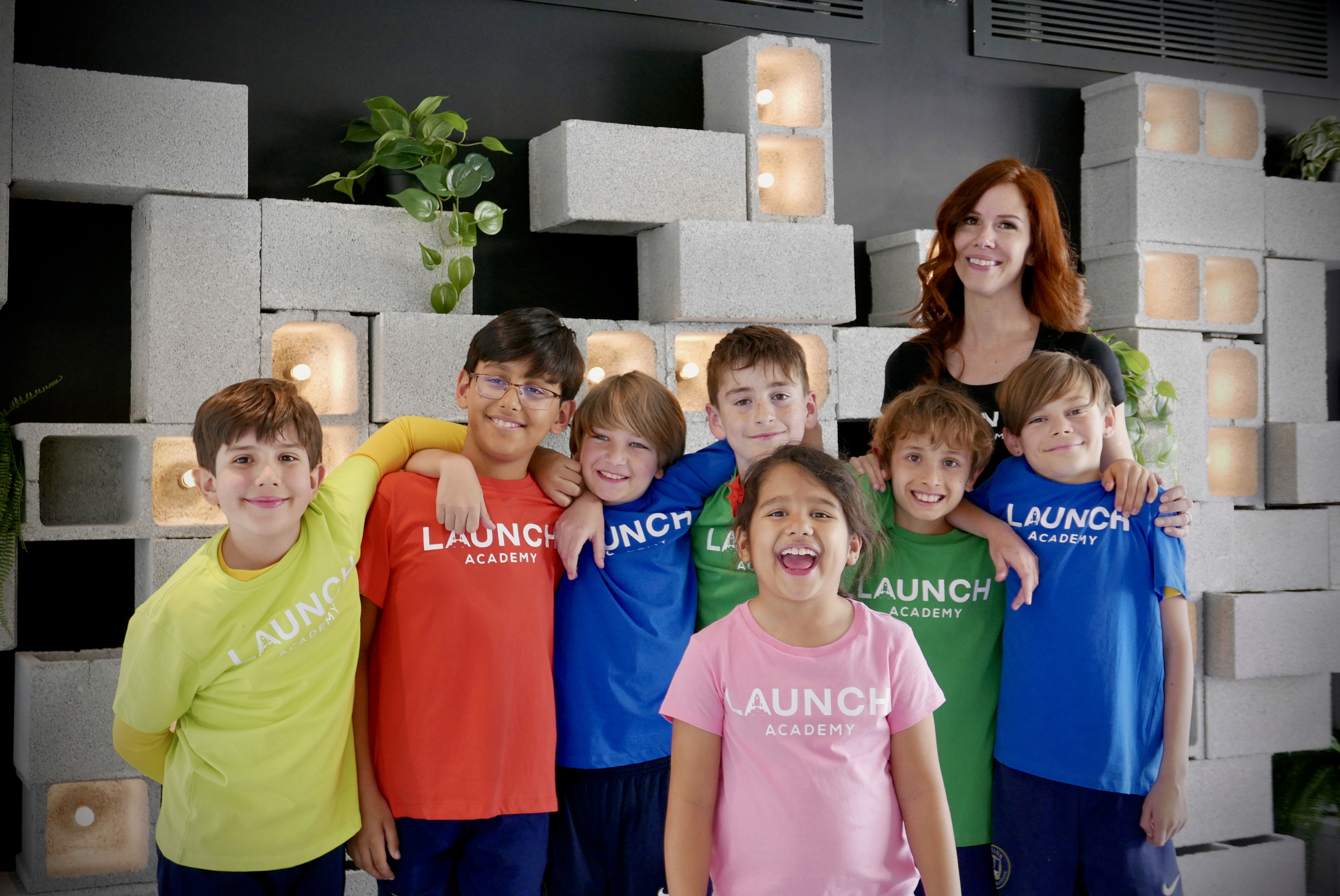
I use my own journey building Launch Academy, an after-school program for 8-11 year olds that teaches them how to create video games and other digital projects, as a case study in creating educational content to examine how these tools are used to design learning resources, structure activities, and reshape teacher–student interaction. I compare and contrast the different modalities I have used through a matrix of factors.
Throughout the course of only a few years, I have seen a personal evolution along the spectrum of how I create educational material. I started by using only a textbook and a slide deck, which evolved into recording video lessons for YouTube, then using a digital twin to create these lessons, and now am focused on creating an interactive avatar to guide students through the material.
There are gains and tradeoffs for each modality. In my opinion, interactive avatars are an exciting emerging tool for teachers to be able to create educational materials that are personalized, localized, and scalable.
C. Comparative Factors for Evaluating Modalities
II.
A. In-Person Instructional Learning
In-person learning is the oldest and most established instructional modality, relying on a teacher delivering content directly to a group of students in a shared physical space. This one-to-many method has existed for more than 2,500 years and is still today the predominant modality in society for learning, especially for younger kids.
In-person learning is a highly effective, social modality that boosts engagement and retention through active interaction and real-time support.
There are many benefits to an in-person experience that are hard to ignore. Learners have the opportunity to collaborate with their group of peers, building social skills and confidence. Because the teacher controls pacing, explanations, and real-time adjustments, students benefit from immediate clarification and spontaneous discussion.
Interactivity is an important variable in a classroom setting. According to Harvard professor Eric Mazur, the lecture can be the most popular but least effective form of teaching. Research shows that traditional lecture-based learning results in low retention. Interactive learners who take on a more active role in learning retain 3x as much information than passive listeners. This is especially true for female students!
By increasing interactivity and incorporating active-learning elements (such as discussion, problem-solving, and peer collaboration) teachers can increase retention to 50-70%. As the old proverb goes, "I see, I forget. I hear, I remember. I do, I understand."
Many students thrive in this type of learning environment, though a fixed-pace teaching style could leave behind learners who are not able to keep up with the class. Although accessibility adjustments can be made to accommodate different languages or neurodivergent students, teacher manpower is needed to address these concerns. Being able to be physically present is non-negotiable for this modality which makes it less scalable that some of the other modalities we will cover.
The technology required for this modality can be minimal: a chalkboard or whiteboard, printed materials, and slide presentations. With the adoption of large language models, teachers are now able to create lesson plans and brainstorm activities easily. Ai can help teachers easily adapt lessons for students who need more support (or create enrichment activities for advanced learners).
AI supports in-person teaching by reducing planning burdens, enhancing personalization, increasing accessibility, and freeing the teacher to focus on high-value human connection.
B. Video-Based Learning
Video-based learning represents a major shift from traditional, ephemeral in-person lessons to content that can be replayed, shared, and infinitely scaled. This modality can function synchronously (such as during a live Zoom class) or asynchronously (through recorded sessions, documentary segments, or YouTube tutorials).
Video-based learning makes education accessible anywhere, anytime, empowering students to review and personalize learning at scale.
Instructional video has been present in classrooms since the 1950s, offering consistent, repeatable explanations that augment the in-person experience. With the launch of YouTube in 2005, one-way tutorial videos became accessible to any learner, anywhere. This democratization of video sparked the growth of educational platforms such as Khan Academy, TED-Ed, and Coursera. During the global pandemic in 2020, video-based instruction became essential, allowing learning to continue without requiring physical classroom attendance.
Video lessons excel in scalability, reusability, and language adaptability, enabling learners to watch with subtitles or translations and revisit difficult concepts at their own pace.
However, in a one-way video medium, interactivity is inherently limited because learners cannot influence pacing, ask questions, or receive real-time feedback. While video can effectively deliver information, it does not create the reciprocal exchange that supports deeper cognitive processing, clarification, or active meaning-making. Industry leaders in this space often encourage learners to complete accompanying exercises to increase opportunities for active engagement.
AI has dramatically lowered the barrier to video creation by enabling educators to generate lessons using text-to-video tools, digital twins, and automated language localization. Digital twins, for example, allow lessons to be delivered—not merely dubbed—in multiple languages and make it far easier for teachers to update content without re-filming.
Video has evolved from one-way broadcast instruction to an increasingly adaptive, personalized, multilingual, and interactive modality powered by AI, dramatically expanding its educational value.
C. Interactive Avatar–Based Learning
Interactive avatar–based learning is an emerging instructional modality that combines the structured delivery of video lessons with the adaptability traditionally associated with in-person teaching. While early chatbots in the 1990s simulated conversation through text, only in recent years have AI-powered avatars achieved human-like visual presence, natural synthetic voice, and low-latency responsiveness suitable for meaningful instructional use.
Interactive AI avatars offer highly personalized, multilingual, and adaptive tutoring at scale, bringing many benefits of one-on-one instruction into digital learning.
These digital instructors can be connected to a large language model but may also draw from a custom knowledge base, a defined pedagogical persona, and a tailored instructional style. Because generative AI can adapt explanations based on learner input—such as language, pacing needs, or prior knowledge—avatars are capable of delivering individualized instruction that approximates the benefits of one-on-one tutoring while maintaining the scalability of digital media.
Unlike one-way video, where learners watch passively, avatar-based environments enable reciprocal interaction. Learners can ask questions, receive immediate feedback, engage in comprehension checks, and follow branching pathways based on their interests or demonstrated understanding. Early research on adaptive learning systems suggests that such feedback-rich, interactive experiences can increase retention rates to as high as 80%, particularly when learners are required to make decisions or articulate their understanding during the lesson.
However, questions remain about emotional engagement. Some students may find avatars motivating and engaging, while others may miss the warmth of human instruction or feel discomfort due to the “uncanny valley” effect. Moreover, although interactive, these experiences are not inherently social or collaborative in the way that in-person learning communities can be.
Accuracy is another area of concern. Because avatar systems rely on large language models, synthetic media, and automated reasoning, they may introduce factual errors, bias, or data-privacy risks if not carefully supervised. Despite these challenges, interactive AI avatars represent one of the most promising frontiers in educational technology due to their capacity for scalability, multilingual delivery, adaptive pacing, and personalized learning pathways.
This modality demands a sophisticated technological ecosystem—including AI-driven avatars, natural language processing, branching logic, and generative media platforms—but it offers a powerful level of personalization, accessibility, and learner autonomy not possible in earlier digital formats.
IV.
A. Origin
My son and daughter love playing video games. I am a visual designer and a developer, so I loved the idea of us building a game together. In 2023 we started creating small projects together in Scratch. The kids loved it and I was blown away by their creativity and problem solving.
There were so many opportunities to learn the basics of Computer Science and Visual Design while we created little games together in a fun and accessible way. I thought how cool would it be if we could create a small group of their peers and learn together. This is how Launch Academy was born.
B. Initial Challenges & Instructional Gaps
Every week, a small group of 7 students gathered after school. The lectures that I created on comparison operators, data types and the binary number system were met with blank stares from tired kids who had just spent the whole day at school. As soon as they had an iPad in front of them, all attention went out the window and I lost them to YouTube.
Luckily for me, I was concurrently taking Introduction to Instructional Design while completing my Master's Degree in Digital Design at Harvard. This helped me to understand the learner experience, structure my lessons in a way that would transfer knowledge to understanding, and drove the decisions I made around the supporting educational materials.
V.
A. In-Person Learning
When I started Launch Academy in 2024, I gathered a small group of students together once a week for one hour, gave a 10‑minute lecture of the day's topic with a supporting slide show, gave a demo of the skill I wanted them to learn, and then gave them time to complete the exercise on their own devices while I checked in with them individually on their progress. I incorporated the “See–Think–Wonder” thinking routine. Based on Harvard’s Project Zero, these routines help children organize their thoughts and process new stimuli.
From a technical standpoint, it wasn't complicated. I spent a couple of hours researching Scratch’s educator handbook, creating the slides, practicing the demo, and then delivering the content. As the course progressed, I started using ChatGPT to help me create the lesson plan, the slide deck and the activities, which reduced the time it took to plan a lesson dramatically.
AI allowed me to shift from manual content creation toward more adaptive, personalized, and collaborative learning experiences.
One of the biggest benefits of this format was peer interaction. Each semester we hosted a game jam where students formed teams and collaborated on creating a game aligned to a specific theme. According to Google’s research from the Aristotle Project, modern work is increasingly team‑based. To prepare my students for the future, I needed to focus not only on how they work individually but also on how they work together.
To support this, students presented their final projects to the class and engaged in structured peer feedback. Giving children structured opportunities to exchange feedback, hear diverse perspectives, and take ownership of their work proved far more motivating than any lecture.
Tech Stack: Google Slides
B. Video-Based Learning
In August of 2025, I shifted to a recorded video format on YouTube to teach children how to use AI to create digital artifacts. The primary benefit was scalability. I could not enrol more than seven children in my in‑person class, and those lessons were ephemeral—there was no way to rewatch or share them. Video allowed global access, asynchronous learning, and multilingual subtitles.
Using Descript helped me combine webcam footage and screen recordings. I recorded lessons as though teaching live and then edited out extraneous segments. However, I was frustrated that updating lessons required re‑filming and that content risked becoming outdated as new models and tools emerged.
In October 2025, Digital Twins transformed the workflow. I trained an AI avatar to deliver my tutorials. This eliminated filming anxiety—my digital twin was always “camera‑ready.” Lessons became scalable, multilingual, and easy to iterate.
Shifting from recorded videos to AI-generated digital twins allowed me to produce scalable, multilingual lessons without filming barriers and with the agility to keep content current.
I used HeyGen for avatar generation and Descript for editing. While effective, this approach was not without challenges. Some viewers felt it lacked the human touch, and occasional uncanny‑valley lip‑sync issues broke immersion. I mitigated this by emphasizing supporting visuals instead of talking‑head footage.
However, during this process I was confronted by the trade-off that traditional video lends to with the lack of interactivity. YouTube tutorials are excellent for quick procedural learning: students can replicate steps precisely. Some children produced impressive projects this way—but struggled to begin independent creations from scratch.
A YouTube coding tutorial teaches procedural fluency without guaranteeing conceptual understanding. Authentic understanding is rooted in direct experience, iterative practice, and contextual application.
Tech Stack: ChatGPT (ideation and scripting), HeyGen (avatars), Descript (editing), Google Flow (visuals)
C. Interactive Avatar–Based Learning
Recently, it become possible to create truly interactive digital avatars capable of supporting dynamic, adaptive learning experiences. These AI-driven instructors can pause for learner actions, test comprehension, branch according to student interests, and provide tailored next steps in real time.
AI-driven interactive avatars blend the strengths of synchronous teaching with the scalability of digital media, enabling responsive, adaptive, and individualized instruction.
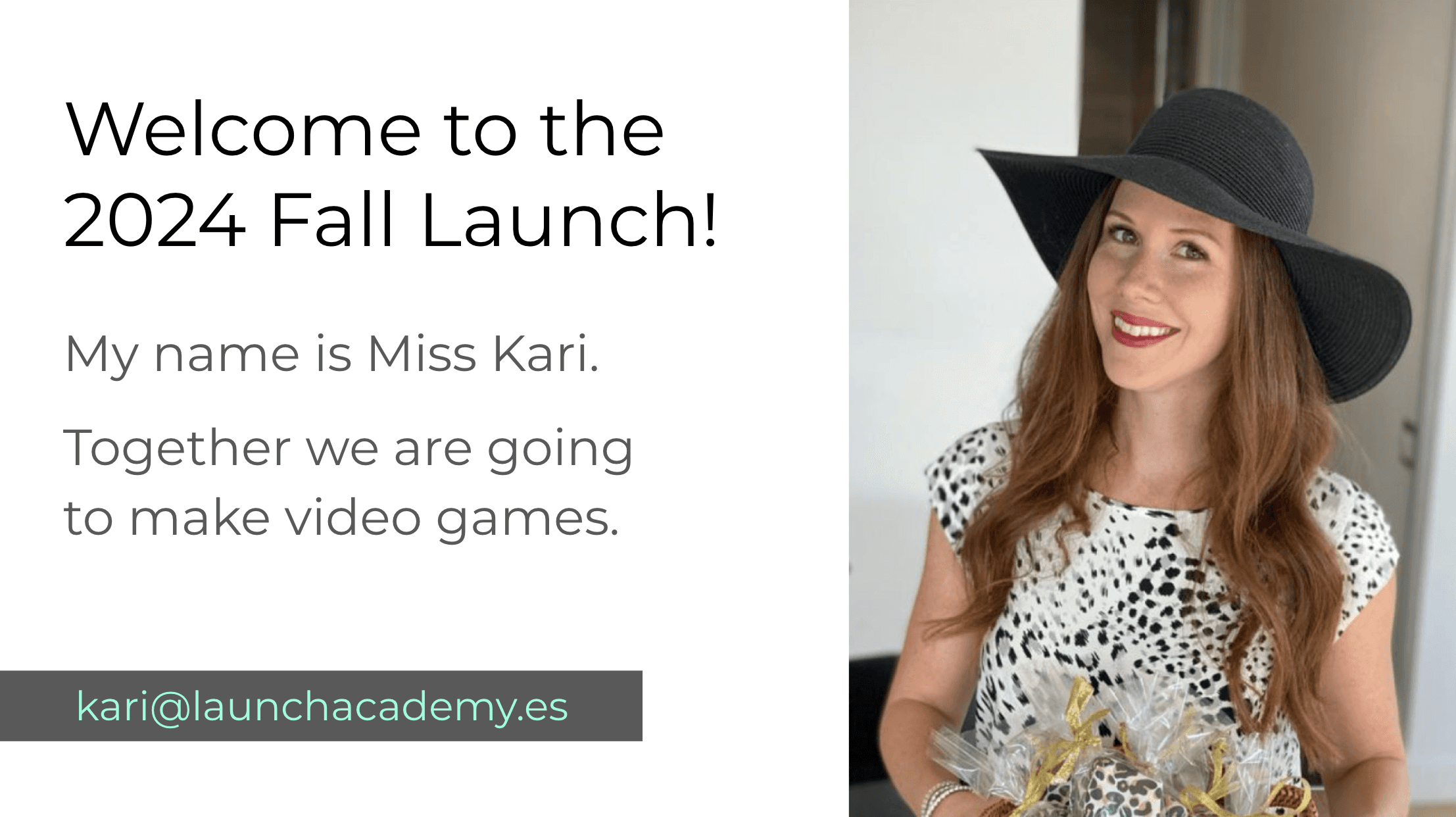
I created this interactive avatar version of Miss Kari for Launch Academy using the HeyGen platform. The goal is to combine the strengths of in-person instruction, such as synchronous structure, interactivity, personalization, and dynamic pacing, with the scalability, consistency, and ease of iteration characteristic of video-based formats. In doing so, the avatar aims to offer a hybrid learning experience that is both adaptive and accessible, supporting learners at scale while preserving key elements that make live teaching effective.
Avatars can be preloaded with a lesson plan, which provides scaffolding for the teaching experience. This is done by uploading a custom knowledge base. You can guide the avatar's personality and teaching style.
There are, of course, important considerations. Avatars must be carefully trained to provide guardrails and gently redirect students when they diverge from the intended learning objective. Although their connection to large language models offers access to an expansive knowledge base, it also introduces risks related to bias, misinformation, and fidelity to curriculum goals.
What remains uncertain is how children will emotionally respond to this modality over time, and whether the novelty of interacting with an AI avatar will amplify engagement or diminish it.
Tech Stack: ChatGPT (ideation and scripting), HeyGen (interactive avatars)
VI.
A. Adopt Blended Modality Ecosystems
Each modality, whether in‑person, video‑based, or avatar‑mediated, offers powerful strengths but also inherent limitations. A blended learning ecosystem allows educators to combine these strengths intentionally:
In‑person time can be devoted to social learning, collaboration, discourse, and creativity.
Video lessons can support foundational knowledge acquisition, allowing learners to pause, replay, and revisit content independently.
Interactive avatars can personalize pathways, offering adaptive support and multilingual access.
By distributing instructional goals across modalities, teachers can optimize cognitive load, increase accessibility, and promote deeper understanding.
B. Use Evidence‑Based Pedagogical Frameworks
The rise of AI tools makes instructional design frameworks more important, not less. Tools should be applied within the structure of:
Understanding by Design (UbD) for backwards planning
Active Learning to move learners from passive watching to doing
Cognitive Load Theory to avoid overwhelm
Making Thinking Visible routines for metacognition
Growth Mindset messaging to support perseverance
These frameworks ensure that technology enhances, not replaces, sound pedagogy.
C. Center Human Connection—Even in AI‑Enhanced Environments
AI can scale access, personalize instruction, and automate routine tasks, but it cannot replace the fundamental human experience of learning together. Educators should design materials that:
maintain opportunities for peer learning
create safe spaces for mistake‑making and iteration
support emotional engagement and belonging
Technology amplifies the teacher’s role—it should never diminish it.
VII.
AI is fundamentally reshaping how teachers create learning experiences by expanding what is possible in both the design and delivery of instruction. Rather than relying on a single modality, educators can now orchestrate a multimodal ecosystem in which content is more adaptive, accessible, and responsive to student needs.
My work with Launch Academy demonstrates this shift in real time. Within the span of a year, my toolkit evolved from simple slide-based lessons to a dynamic blend of instructional videos, digital twins, and interactive AI avatars. This evolution did not occur for novelty’s sake, but because each modality incrementally optimized key educational factors: personalization, interactivity, accessibility, scalability, and the ability to differentiate pacing.
Emerging modalities like AI-driven avatars uniquely combine interactivity, personalization, scalability, and accessibility in a real-time learning experience.
AI empowers teachers to rapidly produce high-quality content, localize materials into multiple languages, and update lessons as technology advances while reducing the time spent on manual production tasks. More importantly, generative AI enables instructional experiences that are increasingly learner-adaptive, meeting students where they are rather than expecting them to conform to a fixed pace.
While AI cannot replace human empathy or the relational aspects of teaching, it can amplify a teacher’s impact by making instruction more responsive, inclusive, and future-ready. The opportunity ahead lies in harnessing AI to support evidence-based pedagogy by ensuring that technology enhances the human experience of learning rather than overshadowing it.